If you’re choosing a new fence for a Massachusetts home, the decision usually comes down to two materials: vinyl or wood. Both can look great and last for years, but they behave very differently through a New England winter and require different upkeep and budgets.
We install both across Central Massachusetts, so here’s an honest comparison of vinyl vs. wood fence options: durability, maintenance, cost, appearance, and how each one handles our tricky weather.
Tl; DR
- Choose vinyl if you want the lowest maintenance, the longest lifespan, and a clean, consistent look. Be prepared to pay more up front.
- Choose wood for a natural look, a lower upfront cost, and greater design flexibility. But be prepared to stain or seal it every few years.
For more details…
Durability
A well-installed vinyl fence typically lasts 25 to 30 years or more. It won’t rot, peel, or attract insects, and quality vinyl is made with impact modifiers and UV inhibitors so it stays flexible and keeps its color. Look for materials made in the USA, since much of the vinyl that is imported from China fades and absorbs moisture, leading to mold and mildew.
Wood fencing, usually pressure-treated pine or cedar, generally lasts 15 to 20 years in our climate if installed properly. Cedar naturally resists rot and insects better than pine, but all wood eventually succumbs to moisture. Posts at ground level are the usual failure point.
Winner: Vinyl, for sheer lifespan, especially with proper installation. Posts need to be set below the frost line, which matters in Massachusetts, where frost heaves can shift a shallow post in a single winter.
Maintenance
This is where the two materials differ the most.
- Vinyl: Wash it once a year with soap and water to clear off pollen, mildew, and road grime. That’s it. No painting, no staining, ever.
- Wood: To get the longest life out of it, plan on staining or sealing every 2 to 3 years, replacing the occasional warped or split board, and keeping vegetation trimmed back so the boards dry out after rain.
Over 20 years, wood maintenance adds up, in products, time, or in paying someone else to do it.
Winner: Vinyl, decisively.
Cost
Wood is the cheaper fence on the day you purchase it. A 6-foot wood privacy fence typically runs about $35 to $65 per linear foot installed here in Massachusetts, while a comparable vinyl privacy fence usually runs about $55 to $95 per linear foot installed. Exact pricing depends on height, style, terrain, and gates.
Wood’s lower upfront price comes with staining or sealing every 2 to 3 years, plus the occasional board replacement. Vinyl costs more at the start and then nearly nothing for decades. By around year ten, the lifetime cost of the two tends to meet in the middle, and vinyl can even pull ahead. It can also be a selling point when you list your home, since the next owner inherits a fence that needs nothing.
Winner: Wood for upfront cost; vinyl for lifetime cost.
Appearance
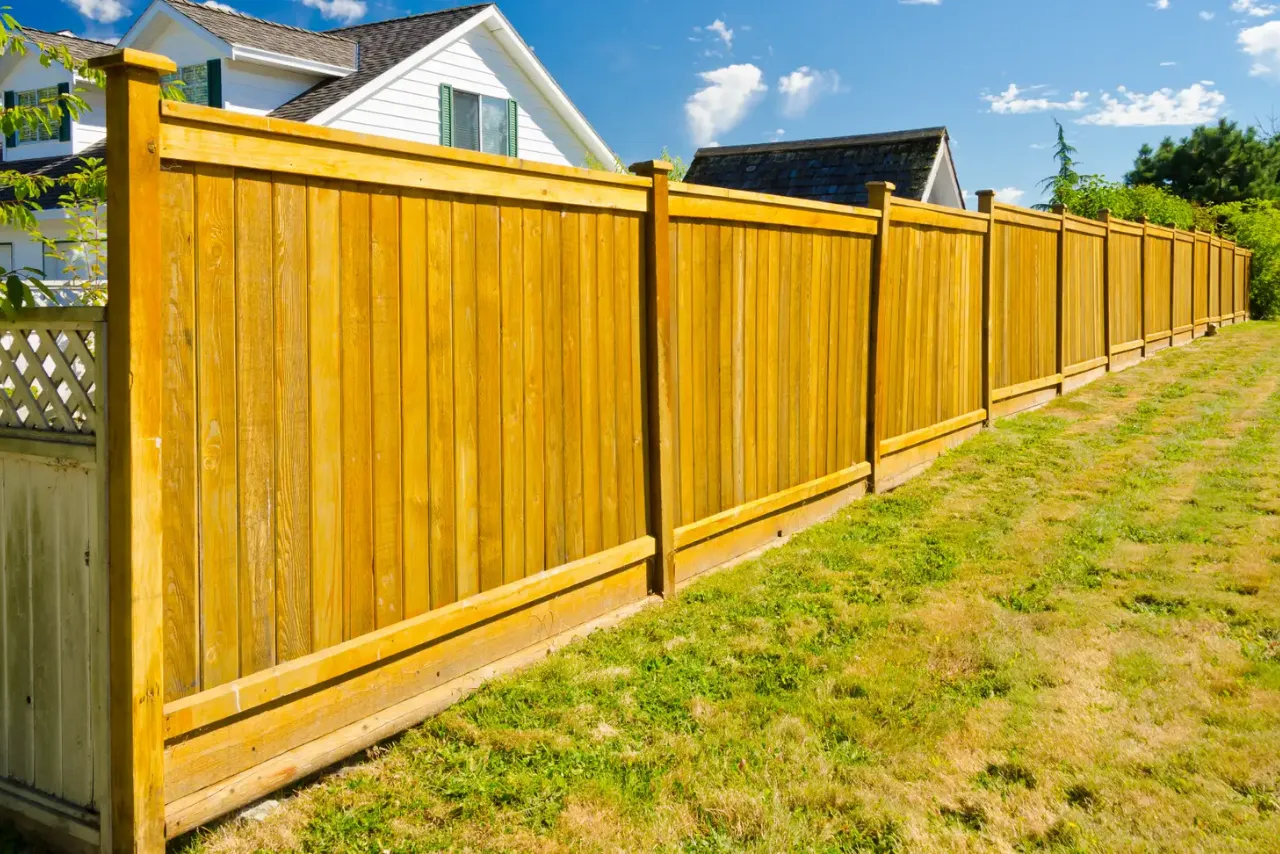
Wood has a warmth and character vinyl can’t fully imitate. It can be painted or stained any color, cut into picket, shadowbox, lattice-top, or board-on-board styles, and it suits the historic and rural homes you see all over Central MA.
Vinyl offers a clean, uniform look that stays that way, with no fading boards or mismatched replacement pickets. Modern vinyl comes in white, tan, gray, and wood-grain textures, but the style range is narrower than wood, and damaged sections are replaced by the panel rather than repaired board by board.
Winner: Tie. It really depends on your home. Traditional and historic homes often suit wood; newer construction and low-upkeep lifestyles suit vinyl. But it is truly personal preference.
Performance in New England weather
Let’s be specific about Massachusetts weather:
- Freeze and thaw cycles: Ground movement tests every fence post. Both materials survive it if posts are set deep and in concrete. Installation quality matters more than material on this one.
- Snow load and plows: Vinyl panels can flex slightly under pressure. Older or cheap vinyl can become brittle in extreme cold snaps, though modern formulations handle New England winters well. Wood absorbs moisture from piled snow and can rot where snow sits against it all season, which is pretty unavoidable in Massachusetts.
- Nor’easters and wind: A solid privacy fence of either material acts like a sail. Semi-privacy styles, such as shadowbox wood or vinyl with airflow spacing, handle wind better on exposed lots.
- Humidity, shade, and mildew: Shaded Massachusetts yards grow mildew on both materials. On vinyl, it washes off. On wood, it feeds the rot cycle if the finish has worn off.
- Salt air (coastal towns): Vinyl holds up fine. Wood needs its finish intact to resist it.
Winner: Vinyl, mainly because moisture, our number one fence killer, simply doesn’t affect it.
So, which is the best fencing for Massachusetts?
For most homeowners we talk to, the honest answer is this: vinyl if you want to install it and forget it; wood if you love the look and don’t mind the upkeep. Both are good options. The wrong choice is the one that doesn’t match how you actually live. A beautiful cedar fence that never gets sealed will look tired in five years, and a vinyl fence on a 200-year-old farmhouse can look out of place.
A few quick rules of thumb:
- Pool fence or rental property? Vinyl. Safety compliance with zero upkeep.
- Historic home or HOA with natural-material rules? Wood.
- Shady, wet lot? Vinyl. Moisture is wood’s enemy.
- Tight budget this year? Wood, with a plan to seal it on schedule.
Get a straight answer for your yard
Every yard is different. Slope, soil, shade, and town setback rules all factor in, and many Massachusetts towns require a permit or a survey for fences over a certain height. We’ll walk around your property, talk through vinyl vs. wood for your specific situation and give you a written estimate with no pressure.
Request a free fencing estimate from Day Home Improvements Co. Call us at (774) 424-9191 or reach out through dayhomeimprovementsco.com. We provide fence installation in Central MA and beyond, and we’ll tell you honestly which material we’d put in our own yard.